
Our Work
Since 2022, Just Home has convened the Social and Affordable Housing Taskforce regularly; attendees include representatives from: AMR Shire Council and planning staff; WA Alliance to End Homelessness; Accordwest; MyHome; Co-operation Housing; with regular guests including, MP’s; Department of Communities etc.
The Taskforce had some significant wins, with news of the completion of four new public housing units near Margaret River town centre, and the beginning of construction of fifteen out of twenty-five planned social housing dwellings in the Kyloring Housing Cooperative in Witchcliffe.
My Home is currently waiting on DA approval for social housing project on Clarke Road, which has been planned for some years now and faced a number of hurdles.
The Taskforce has been advocating for the old Water Corp site on Wilmott Avenue to become a social housing project; we are awaiting the news the site has successfully been transferred into the hands of the Department of Communities.
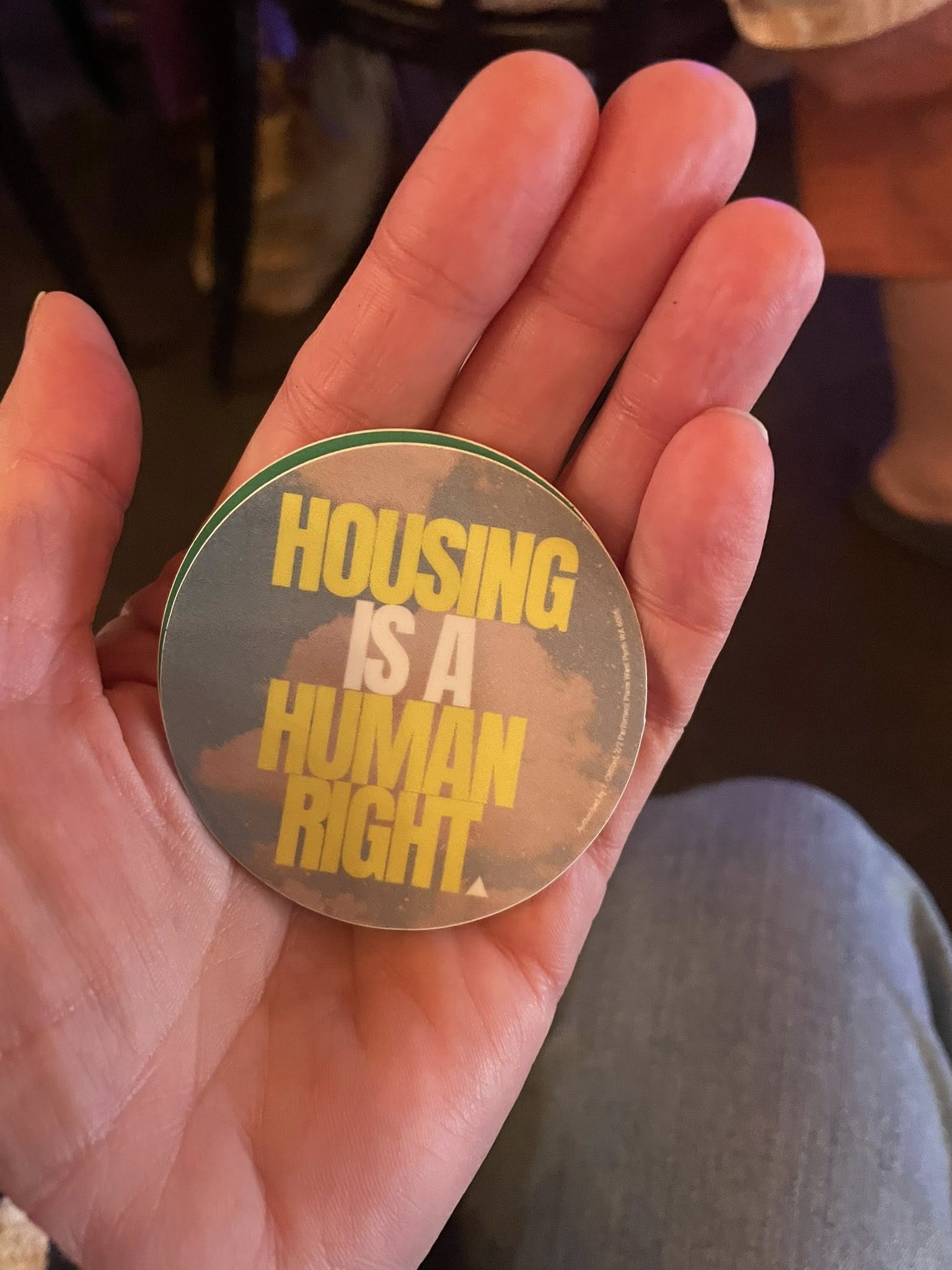
The Social & Affordable Housing Taskforce Tackles AMR’s Housing Challenges
Just Home’s advocacy and voice for people with lived experience of homelessness in Augusta Margaret River region, can only highlight the unmet needs. To make a real difference to housing availability, Just Home has been coordinating and convenes the Social & Affordable Housing Taskforce (SAHT), for the past 4 years. This is the engine room to advance possibilities that tackle AMR’s housing challenges; with key major stakeholders at the table contributing to place-based, innovative ideas that can shift the dynamics for our community. However, we need community supporting these ideas, so it becomes a local movement to help make a difference!
In March 2026 Just Home facilitated Connections Week, filled with many community conversations & evidence that indicated the region is facing three distinct housing challenges, not one. A small working group from the Social & Affordable Housing Taskforce began brainstorming these issues to devise a working document – Roadmap, which indicates the way forward to address each issue.
Entitled “The Region Has Stopped Housing Its Own”, it tells the story how devastating it is for a community when “workers can’t find a rental; people whose health is failing after years on the street; and people about to lose their footing need different things” – that are just not available!
The Taskforce is now approaching the AMR housing crisis with a sharper view; enhanced by the roadmap identifying the nuances of each issue with a more focused and effective response, which intersects with the specific needs of each group to guide targeted solutions.
Workers who cannot get housed
Connections Week revealed a large group of young, employed people sleeping in cars or vans despite having wages; highlighting a significant mismatch between local housing needs and available housing options.
Community knows there are also older workers living in caravans and cars as they cannot afford a rental. The Taskforce can work with relevant authorities regarding existing short stay accommodation requirements, while also exploring smaller designed, modular housing to create the missing mix for workers.
The Roadmap notes, owners are driven not only by profit but by “fear… that if they get a bad tenant, they won’t be able to evict them”. The Taskforce response is to find our way to win back homes lost to short stays, designing offers that remove the fear and risk for owners through head-leasing, professional management, and insurance.
People experiencing long-term homelessness
A smaller, older group has been homeless for years — “on average five years since their last permanent home, adding up to 188 years of homelessness between them,” often with high rates of serious health conditions. For this group, “services without housing just manage their decline”. The Taskforce is therefore prioritising a small number of permanent homes with wrap-around support, including mental health, AOD services, wellbeing and culturally safe practice.
To make this possible, the Taskforce aims to activate some of the region’s greatest strengths: local philanthropy and community wealth. The roadmap highlights that “this community has real strengths we can use: people who really care and genuine local wealth”.
The idea for a Community Foundation, is to give residents, businesses, and philanthropists a structured way to contribute land, funds, and investment directly into housing solutions. This creates a powerful engine for the hardest work: building supported housing for people who have been homeless the longest; also giving the Community Foundation ability to create diverse housing options to suit both seasonal and long-term worker’s needs.
A Community Foundation (CF) is a mechanism for local wealth to proudly support its own community, deepening a sense of belonging, and strengthens the Taskforce’s endeavours by:
This enables CF participants co-funding leverage when seeking State and Federal investment. As the roadmap emphasises, “Everything we build ourselves makes the ask to government harder to ignore.” With community backing, the Taskforce can present government with shovel ready proposals; land secured, partners lined up, modular housing options identified. All of this could strengthen the case for government investment in social and supported housing.
People falling into homelessness through known doors
The Taskforce is also addressing the predictable pathways into homelessness: family and domestic violence, young people leaving care, and sudden financial shocks. The roadmap notes that “each one is a door where we could catch people early – and right now we don’t”. The Taskforce is developing a local safety net that includes weather triggered emergency accommodation, crisis options, and prevention measures such as hardship funds and local pathways for people leaving violence or care.
“
Across all three identified housing challenges, the Taskforce can combine operational responses to deliver immediate relief; and ideas for strategic reforms aimed at reshaping the housing system. These include policy advocacy, Social Benefits threshold reform, exploring inclusionary zoning and other planning reforms, and coordinated mobilisation of public and private investment. The roadmap provides a clear direction for increasing both the volume and diversity of housing options, ensuring the AMR region can house its own community sustainably… We hope to see you on board to take the journey with us.
Rebecca Roberts
Chair, Just Home